

2: Creativity, Innovation, and Design Thinking
- Page ID
- 163060

\( \newcommand{\vecs}[1]{\overset { \scriptstyle \rightharpoonup} {\mathbf{#1}} } \)
\( \newcommand{\vecd}[1]{\overset{-\!-\!\rightharpoonup}{\vphantom{a}\smash {#1}}} \)
\( \newcommand{\dsum}{\displaystyle\sum\limits} \)
\( \newcommand{\dint}{\displaystyle\int\limits} \)
\( \newcommand{\dlim}{\displaystyle\lim\limits} \)
\( \newcommand{\id}{\mathrm{id}}\) \( \newcommand{\Span}{\mathrm{span}}\)
( \newcommand{\kernel}{\mathrm{null}\,}\) \( \newcommand{\range}{\mathrm{range}\,}\)
\( \newcommand{\RealPart}{\mathrm{Re}}\) \( \newcommand{\ImaginaryPart}{\mathrm{Im}}\)
\( \newcommand{\Argument}{\mathrm{Arg}}\) \( \newcommand{\norm}[1]{\| #1 \|}\)
\( \newcommand{\inner}[2]{\langle #1, #2 \rangle}\)
\( \newcommand{\Span}{\mathrm{span}}\)
\( \newcommand{\id}{\mathrm{id}}\)
\( \newcommand{\Span}{\mathrm{span}}\)
\( \newcommand{\kernel}{\mathrm{null}\,}\)
\( \newcommand{\range}{\mathrm{range}\,}\)
\( \newcommand{\RealPart}{\mathrm{Re}}\)
\( \newcommand{\ImaginaryPart}{\mathrm{Im}}\)
\( \newcommand{\Argument}{\mathrm{Arg}}\)
\( \newcommand{\norm}[1]{\| #1 \|}\)
\( \newcommand{\inner}[2]{\langle #1, #2 \rangle}\)
\( \newcommand{\Span}{\mathrm{span}}\) \( \newcommand{\AA}{\unicode[.8,0]{x212B}}\)
\( \newcommand{\vectorA}[1]{\vec{#1}} % arrow\)
\( \newcommand{\vectorAt}[1]{\vec{\text{#1}}} % arrow\)
\( \newcommand{\vectorB}[1]{\overset { \scriptstyle \rightharpoonup} {\mathbf{#1}} } \)
\( \newcommand{\vectorC}[1]{\textbf{#1}} \)
\( \newcommand{\vectorD}[1]{\overrightarrow{#1}} \)
\( \newcommand{\vectorDt}[1]{\overrightarrow{\text{#1}}} \)
\( \newcommand{\vectE}[1]{\overset{-\!-\!\rightharpoonup}{\vphantom{a}\smash{\mathbf {#1}}}} \)
\( \newcommand{\vecs}[1]{\overset { \scriptstyle \rightharpoonup} {\mathbf{#1}} } \)
\(\newcommand{\longvect}{\overrightarrow}\)
\( \newcommand{\vecd}[1]{\overset{-\!-\!\rightharpoonup}{\vphantom{a}\smash {#1}}} \)
\(\newcommand{\avec}{\mathbf a}\) \(\newcommand{\bvec}{\mathbf b}\) \(\newcommand{\cvec}{\mathbf c}\) \(\newcommand{\dvec}{\mathbf d}\) \(\newcommand{\dtil}{\widetilde{\mathbf d}}\) \(\newcommand{\evec}{\mathbf e}\) \(\newcommand{\fvec}{\mathbf f}\) \(\newcommand{\nvec}{\mathbf n}\) \(\newcommand{\pvec}{\mathbf p}\) \(\newcommand{\qvec}{\mathbf q}\) \(\newcommand{\svec}{\mathbf s}\) \(\newcommand{\tvec}{\mathbf t}\) \(\newcommand{\uvec}{\mathbf u}\) \(\newcommand{\vvec}{\mathbf v}\) \(\newcommand{\wvec}{\mathbf w}\) \(\newcommand{\xvec}{\mathbf x}\) \(\newcommand{\yvec}{\mathbf y}\) \(\newcommand{\zvec}{\mathbf z}\) \(\newcommand{\rvec}{\mathbf r}\) \(\newcommand{\mvec}{\mathbf m}\) \(\newcommand{\zerovec}{\mathbf 0}\) \(\newcommand{\onevec}{\mathbf 1}\) \(\newcommand{\real}{\mathbb R}\) \(\newcommand{\twovec}[2]{\left[\begin{array}{r}#1 \\ #2 \end{array}\right]}\) \(\newcommand{\ctwovec}[2]{\left[\begin{array}{c}#1 \\ #2 \end{array}\right]}\) \(\newcommand{\threevec}[3]{\left[\begin{array}{r}#1 \\ #2 \\ #3 \end{array}\right]}\) \(\newcommand{\cthreevec}[3]{\left[\begin{array}{c}#1 \\ #2 \\ #3 \end{array}\right]}\) \(\newcommand{\fourvec}[4]{\left[\begin{array}{r}#1 \\ #2 \\ #3 \\ #4 \end{array}\right]}\) \(\newcommand{\cfourvec}[4]{\left[\begin{array}{c}#1 \\ #2 \\ #3 \\ #4 \end{array}\right]}\) \(\newcommand{\fivevec}[5]{\left[\begin{array}{r}#1 \\ #2 \\ #3 \\ #4 \\ #5 \\ \end{array}\right]}\) \(\newcommand{\cfivevec}[5]{\left[\begin{array}{c}#1 \\ #2 \\ #3 \\ #4 \\ #5 \\ \end{array}\right]}\) \(\newcommand{\mattwo}[4]{\left[\begin{array}{rr}#1 \amp #2 \\ #3 \amp #4 \\ \end{array}\right]}\) \(\newcommand{\laspan}[1]{\text{Span}\{#1\}}\) \(\newcommand{\bcal}{\cal B}\) \(\newcommand{\ccal}{\cal C}\) \(\newcommand{\scal}{\cal S}\) \(\newcommand{\wcal}{\cal W}\) \(\newcommand{\ecal}{\cal E}\) \(\newcommand{\coords}[2]{\left\{#1\right\}_{#2}}\) \(\newcommand{\gray}[1]{\color{gray}{#1}}\) \(\newcommand{\lgray}[1]{\color{lightgray}{#1}}\) \(\newcommand{\rank}{\operatorname{rank}}\) \(\newcommand{\row}{\text{Row}}\) \(\newcommand{\col}{\text{Col}}\) \(\renewcommand{\row}{\text{Row}}\) \(\newcommand{\nul}{\text{Nul}}\) \(\newcommand{\var}{\text{Var}}\) \(\newcommand{\corr}{\text{corr}}\) \(\newcommand{\len}[1]{\left|#1\right|}\) \(\newcommand{\bbar}{\overline{\bvec}}\) \(\newcommand{\bhat}{\widehat{\bvec}}\) \(\newcommand{\bperp}{\bvec^\perp}\) \(\newcommand{\xhat}{\widehat{\xvec}}\) \(\newcommand{\vhat}{\widehat{\vvec}}\) \(\newcommand{\uhat}{\widehat{\uvec}}\) \(\newcommand{\what}{\widehat{\wvec}}\) \(\newcommand{\Sighat}{\widehat{\Sigma}}\) \(\newcommand{\lt}{<}\) \(\newcommand{\gt}{>}\) \(\newcommand{\amp}{&}\) \(\definecolor{fillinmathshade}{gray}{0.9}\)
Image retrieved from: Medium.com
| Learning Objectives |
|---|
|
After completing this chapter, you will be able to:
|
Small business owners are constantly navigating uncertainty: what product to offer, how to stand out from competitors, what problems their customers actually need solved. The ability to think creatively, recognize opportunities, and approach challenges with a structured process is not a talent reserved for artists or tech innovators. It is a practical skill that every small business owner can develop and use.
This chapter introduces three interconnected concepts (creativity, innovation, and invention) and the processes that connect them to real business decisions. You will also explore design thinking, a structured approach to problem solving that puts the customer at the center of every decision.
2.1 Creativity, Innovation, and Invention
One of the key requirements for success in small business is the ability to develop and offer something of value to the marketplace. Over time, business ownership has become closely associated with creativity, the ability to develop something original, particularly an idea or a representation of an idea. Innovation requires creativity, but it is more specifically the application of creativity, the manifestation of a creative idea into a usable product or service. Invention goes further still: all inventions contain innovations, but not every innovation rises to the level of a unique invention. An invention is a truly novel product, service, or process, not an addition to or a variant of something existing, but something genuinely new.
| Concept | Description | Example |
|---|---|---|
|
Creativity |
The ability to develop something original, particularly an idea or a representation of an idea. |
The idea that human voice could travel over electrical wire. |
|
Innovation |
A change that adds value to an existing product or service. |
Caller ID — adding a new feature that made the existing telephone more useful. |
|
Invention |
A truly novel product, service, or process that represents a meaningful leap, something genuinely new and different. |
The telephone itself — something that had never existed before. |
Creativity, innovation, and inventiveness can be tightly linked, and it is possible for one person to demonstrate all three to some degree. These are also skills that can be developed. In the sections that follow, each concept is examined in more depth.
Creativity
Creativity in small business is not so different from creativity in art. Inspiration comes from books, conversations, observations of existing products and services, time in nature, and deliberate exercises like brainstorming. Ideation is the purposeful process of opening your mind to new trains of thought that branch out from a stated purpose or problem. Brainstorming (the generation of ideas in an environment free of judgment or criticism, with the goal of creating solutions) is one of dozens of methods for generating new ideas.
Setting aside dedicated time for ideation matters. Letting your mind explore a problem from multiple angles, free from routine thought patterns, is a necessary part of the process. If you consciously build time for creative thinking into your work, you will broaden your perspective and open yourself to solutions you might not have otherwise considered.
Small business owners work with two types of thinking. Linear thinking, sometimes called vertical thinking, involves a logical, step-by-step process. Lateral thinking, by contrast, is free and open thinking in which established patterns of logic are deliberately set aside. Linear thinking is essential for turning an idea into an operating business. Lateral thinking opens up the creative space needed to solve unexpected problems and see opportunities others have missed.

Figure 2.1 Linear thinking follows a direct, step-by-step path. Lateral thinking opens up new directions. Source: OpenStax Entrepreneurship (CC BY 4.0).
It is entirely possible to run a successful small business that is built on linear thinking. Many viable businesses flow logically from existing products and services. However, increased global competition, rapid technological change, and shifting consumer behavior have made creativity and lateral thinking increasingly important. Small business owners who can see beyond incremental improvements and identify genuinely new solutions are better positioned to stand out in crowded markets.
Innovation
Innovation is a change that adds value to an existing product or service. According to management thinker Peter Drucker, the key point about innovation is that it responds to changes both within markets and from outside them. Innovation can be planned and systematic. Not all innovation is purely creative or spontaneous. A small business that sets out to improve a customer experience, streamline a process, or solve a recurring complaint is innovating deliberately.
One example of systematic innovation is the self-serve kiosk in fast-food restaurants. McDonald's was among the first to deploy these widely, responding to changes in customer demographics and a desire for faster service. The kiosks were not invented from nothing, they applied existing technology to a familiar problem. That is the essence of most innovation: applying what exists in a new way to solve a real problem better.
Disruptive innovation is an innovation that fundamentally alters how a market operates, often displacing established products, services, or business models. Harvard professor Clayton Christensen, who coined the term in the 1990s, originally used it to describe innovations that entered markets from the bottom up: simpler, cheaper, and initially overlooked by established competitors (Christensen, 1997). The concept has since expanded in common usage to include innovations that redefine marketplace expectations more broadly. Artificial intelligence is a current example: rather than starting cheaper or simpler, it has transformed workflows, decision-making, and competition across industries simultaneously.
One practical tool for finding innovation opportunities is looking for pain points: problems people have with existing products or services that a modified or new solution could address more effectively. Once a pain point is identified in your own business, in a competitor's offering, or in the market generally, creativity can be applied to test and develop solutions. This kind of incremental innovation, modifying something that exists to make it work better, is the most common form of innovation in small business.
Invention
Invention is a leap beyond innovation. Some inventions combine multiple innovations into something genuinely new. Invention requires creativity, but it goes beyond generating new ideas or building on existing ones; inventors create something that did not exist before. For small business owners, a true invention can be strategically valuable because it may create a new market category rather than competing within an existing one. Intellectual property protections such as patents can also help protect an invented product or process from being copied.
Consider the difference between the telephone and caller ID. The telephone was an invention. It created an entirely new way for people to communicate that had never existed before. Caller ID, introduced decades later, was an innovation: it added value to an existing product without fundamentally changing what it was. Both required creativity, but only one created something genuinely new.
Beyond market advantage, significant inventions carry social and cultural weight. The invention of desktop computing, for example, transformed entire industries and reshaped what was expected of the average office worker. The ripple effects spread from corporate workplaces into educational systems. For most small business owners, invention at this scale is not the goal but understanding the concept helps clarify the spectrum from creative thinking to innovation to something more transformational.
| Key Takeaways |
|---|
|
2.2 The Creative Process
Raw creativity may feel spontaneous, but creative people who produce consistently whether in art, science, or business have typically developed a process. They practice, refine, and integrate creative thinking with other skills. The good news is that anyone can improve their creative output with deliberate effort. The five-stage creative process described here offers a practical model for applying creativity in a small business context.
The five stages of the creative process are:
- Preparation
- Incubation
- Insight
- Evaluation
- Elaboration

Figure 2.2 The Five Stages of Creativity. Source: Based on Graham Wallas, The Art of Thought. Adapted from OpenStax Entrepreneurship (CC BY 4.0)
Preparation
Preparation involves investigating a chosen area of interest, opening your mind, and immersing yourself in relevant materials, practices, and examples. If you have ever tried to produce something creative without first absorbing information about the field, you understand how difficult it is. A base of knowledge and experience helps you generate ideas faster and recognize which ones have potential.
Preparation includes observing what others in your field are doing, not to copy them but to understand the landscape. For example, someone developing a new fitness concept might try multiple gym formats, fitness apps, and class styles before developing their own idea. Preparation is also a time for setting goals: what are you trying to create, and what does success look like? During this stage, benchmarks begin to emerge, standards against which you can later measure your own creative work.
Incubation
Incubation is giving your subconscious mind time to process what you absorbed during preparation. It involves stepping away from active work on the problem. From the outside it may look like rest, but the mind continues working beneath the surface. A change of environment is a key part of incubation: a walk, a different workspace, or a physical hobby can create the mental distance needed for ideas to develop.
Incubation takes language out of the thought process to some degree. When you are not actively applying words to a problem, your mind can make associations that go deeper than conscious analysis allows. Many creative and innovative people develop habits of physical activity, running, hiking, cooking, precisely because these activities keep the hands busy while the mind incubates. Patiently allowing incubation to work is one of the harder disciplines of the creative process.
Insight
Insight, sometimes called illumination, is the “aha” moment, when a solution or idea suddenly becomes accessible to your conscious mind. Insights may arrive all at once or in increments. They are difficult to force or predict, but they are more likely to come to a prepared mind that has also allowed time for incubation. For a small business owner, an insight might be a new product idea, a better way to serve a recurring customer need, or the realization of why a current approach isn't working and what to do instead.
Evaluation
Evaluation is the purposeful examination of your ideas. This is where you compare your insights against the goals you set during preparation, the standards of your field or industry, and the needs of your target customer. Evaluation often involves inviting outside perspectives: a trusted colleague, a potential customer, or a mentor. The primary objective is to understand whether your idea genuinely addresses a real need and holds up against existing alternatives. Good evaluation is honest, even when the feedback is uncomfortable.
Elaboration
Elaboration is the production stage where the idea becomes real. In a small business context, elaboration might mean building a minimum viable product (MVP): a version of your product or service that is functional enough to bring to customers while still being refined. An MVP allows you to begin gathering real feedback before investing heavily in a finished version. Elaboration may also mean a prototype, a pilot program, or a soft launch to a limited audience. The goal is to make something available so that customers can respond to it and so you can learn from that response.
| Key Takeaways |
|---|
|
2.3 Creative Problem Solving
Small business owners are, by necessity, problem solvers. A customer complaint, a supplier failure, a scheduling gap, a shift in the market are problems that can arrive constantly, and the ability to address them quickly and effectively is one of the most valuable skills an owner can have.
The business writer Larry Myler, writing in Forbes, observed that problem solving is inherently reactive, you have to wait for a problem to occur before you can solve it. The most effective small business owners go further: they anticipate problems and work to prevent them. They build systems for continuous improvement, which sometimes means deliberately changing things that seem to be working fine in order to stay ahead of market shifts. This proactive stance, solving problems before they arrive, is what separates reactive management from strategic ownership.
There is no single right way to solve a problem. The approach that works best depends on the situation, the stakes, the time available, and the owner's own natural tendencies. Three broad problem-solving styles are most commonly observed among small business owners.
Self-Regulating Problem Solvers
Self-regulating problem solvers work autonomously. They identify a problem, visualize a solution, and act quickly often without seeking outside input. Their greatest competitive advantage is speed. When a server goes down, an order is wrong, or a process breaks, the self-regulating owner diagnoses and fixes the issue immediately. This style is effective in fast-paced environments where time is of the essence and the owner has the expertise to act confidently.

Figure 2.3 Self-Regulating Problem Solver. Source: OpenStax Entrepreneurship (CC BY 4.0)
Theorist Problem Solvers
Theorist problem solvers are process-oriented and systematic. Rather than jumping to a solution, they build a path from what is known toward what is possible, experimenting and learning from each attempt. They document what fails as carefully as what succeeds, using that information to refine their approach. This style takes longer than self-regulation but tends to produce more durable solutions, especially for complex or novel problems where the right answer isn't obvious at the outset.
Marie Curie, working toward the isolation of radium, is one historical example of theorist problem solving: each failed approach eliminated a possibility and pointed toward the next experiment. For a small business owner, this style is well-suited to developing a new product, entering an unfamiliar market, or rebuilding a system that isn't working.

Figure 2.4 Theorist Problem Solver. Source: OpenStax Entrepreneurship (CC BY 4.0)
Petitioner Problem Solvers
Petitioner problem solvers seek input from others before acting. They consult mentors, team members, and people with relevant experience, preferring a consensus-driven path. This approach takes the most time, but it draws on a wider range of perspectives and tends to produce solutions that others have bought into which matters when implementation depends on a team. In small business contexts, the petitioner style works well when the stakes are high, the situation is unfamiliar, or the decision will affect multiple people whose support is needed.
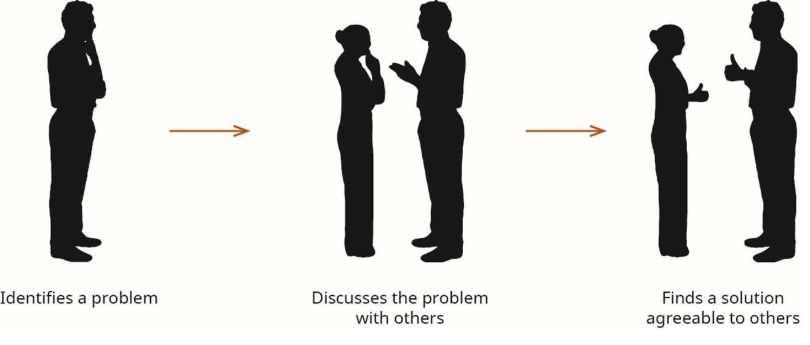
Figure 2.5 Petitioner Problem Solver. Source: OpenStax Entrepreneurship (CC BY 4.0)
No problem-solving style is inherently better than the others. Each has strengths and limitations, and the best approach depends on the problem at hand. Effective small business owners learn to recognize their natural style and to adapt it when the situation calls for something different. A self-regulator who slows down to consult others when navigating an unfamiliar legal issue is making a smart adjustment. A petitioner who acts decisively when a customer complaint needs an immediate response is doing the same.
| Key Takeaways |
|---|
|
2.4 Design Thinking
David Kelley, founder of Stanford University's Design School and co-founder of the design firm IDEO, is credited with bringing design thinking into mainstream business practice. IDEO, which grew from a merger of two innovative design firms, began by designing physical products including Apple's first mouse and one of the first laptop computers. Over time, the firm shifted from designing products to designing customer experiences. Kelley began using the word “thinking” to describe this experience-focused design process, and the term design thinking was born.
Design thinking is a method that focuses the design and development of a product or service on the needs of the customer, typically involving an empathy-driven process to define complex problems and create solutions that address those problems. It has expanded well beyond product design into digital experiences, services, business strategy, and social policy. For small business owners, it offers a structured way to make sure the business is solving the right problem, the one customers actually have, not just the one the owner assumes they have.
Human-Centered Design Thinking
One widely taught approach to design thinking is human-centered design (HCD), developed and taught at Stanford's Design School and organizations like the LUMA Institute. As the name suggests, HCD places real people at the center of the process. Ideas come from exploring actual customers, their lives, their needs, their frustrations, rather than from assumptions. HCD moves through five interconnected stages:
- Empathizing — Understanding the people you are designing for. This means observing, listening, and asking questions, setting aside your own assumptions to genuinely understand the customer's experience.
- Defining — Synthesizing what you learned in the empathy stage into a clear problem statement. The goal is to articulate the core problem you are trying to solve, often framed as a “How might we…?” question.
- Ideating — Generating a wide range of possible solutions to the defined problem. This is the brainstorming stage, where quantity of ideas matters more than immediate quality.
- Prototyping — Building inexpensive, scaled-down versions of potential solutions to test and explore. Prototypes are meant to be rough. The goal is to learn, not to produce a finished product.
- Testing — Putting the best prototypes in front of real users to gather feedback. Testing often sends the process back to earlier stages, as new information refines the understanding of the problem.
| Empathizing | Defining | Ideating | Prototyping | Testing |
|---|---|---|---|---|
|
Observe and listen to real customers. Set aside assumptions to understand their actual needs and frustrations. |
Synthesize what you learned into a clear problem statement, often framed as a "How might we…?" question. |
Generate a wide range of possible solutions. Quantity matters more than immediate quality at this stage. |
Build rough, inexpensive versions of potential solutions. The goal is to learn, not to produce a finished product. |
Put prototypes in front of real users. Feedback often sends the process back to earlier stages. |
Figure 2.6 The Five Stages of Human-Centered Design Thinking.
Design thinking is not a linear checklist. In practice, small business owners move back and forth between stages as they learn more. A testing session might reveal that the problem statement needs to be revised. A prototype might spark a new ideation session. The process is iterative by design.
For small business owners, design thinking offers a practical discipline: before investing in a product, service, or system, make sure you understand the person you are building it for. The most common cause of small business failure is not poor execution. It is solving the wrong problem, or solving the right problem for the wrong customer.
| Key Takeaways |
|---|
|
Watch and Reflect
|
▶ Watch: Brainstorming and Other Ideation Techniques |
|
▶ Watch: Brainstorming and Other Ideation Techniques Source: Stanford Biodesign YouTube Clickable Link (opens in a new window) Length: 2:46 David and Tom Kelley, founders of IDEO, one of the world's leading design and innovation firms, discuss how brainstorming and other ideation techniques work in practice. They make the case for diverse perspectives in the creative process, explain what productive brainstorming actually looks like, and walk through the empathy map, a tool for observing and understanding what customers are really thinking and feeling.
After watching, consider the following reflection questions:
|
Check Your Understanding
Use the following questions to test your comprehension of this chapter.
- The chapter distinguishes between creativity, innovation, and invention. Think about a small business you know or have visited recently. Which of the three best describes what makes that business stand out? Explain your reasoning.
- The five-stage creative process includes a stage called incubation, deliberately stepping away from a problem to let your mind work on it. Does this match your own experience with problem solving? Can you think of a time when stepping away from a challenge led to a breakthrough?
- Of the three problem-solving types: self-regulating, theorist, and petitioner which best describes how you typically approach challenges? How might your preferred style affect how you manage a small business?
- Design thinking places empathy at the center of problem solving. Think about a Las Vegas small business that you believe does a good job of understanding its customers’ needs. What evidence do you see of that customer-centered approach? What might they do better?
- The elaboration stage of the creative process often involves launching a minimum viable product (MVP). What are the advantages and risks of bringing a product to market before it is fully finished?
Key Terms
Brainstorming — The generation of ideas in an environment free of judgment or criticism, with the goal of producing solutions to a defined problem.
Creativity — The ability to develop something original, particularly an idea or a representation of an idea.
Design thinking — A method that focuses the design and development of a product or service on the needs of the customer, using an empathy-driven process to define complex problems and create solutions.
Disruptive innovation — An innovation that fundamentally alters how a market operates, often displacing established products, services, or business models. Originally coined by Clayton Christensen (1997) to describe innovations that entered markets from the bottom up, the concept has since expanded to include innovations that redefine marketplace expectations more broadly.
Elaboration — The fifth stage of the creative process, in which ideas become real through production, prototyping, or the release of a minimum viable product (MVP).
Human-centered design (HCD) — A design thinking approach that draws inspiration from real people — their needs, behaviors, and problems — as the primary source of ideas and solutions.
Ideation — The purposeful process of opening the mind to new trains of thought branching out from a stated purpose or problem. Brainstorming is one ideation technique.
Incubation — The second stage of the creative process, in which the subconscious mind continues processing a problem while the conscious mind is occupied elsewhere.
Innovation — A change that adds value to an existing product or service.
Insight — The third stage of the creative process; the “aha” moment when a solution or idea becomes accessible to conscious thought.
Invention — A truly novel product, service, or process that represents a meaningful leap beyond existing products rather than a variation on them.
Lateral thinking — Free, open thinking in which established patterns of logic are deliberately set aside in order to explore new possibilities.
Linear thinking — A logical, step-by-step thought process; also called vertical thinking. Essential for execution and implementation.
Minimum viable product (MVP) — A version of a product or service that is functional enough to bring to market for testing and feedback, while still being refined and developed.
Pain point — A problem that people have with an existing product or service that could be addressed by a new or modified solution.
References
Christensen, C. M. (1997). The innovator's dilemma: When new technologies cause great firms to fail. Harvard Business School Press.
OpenStax. (n.d.). Entrepreneurship. (Licensed CC BY 4.0)
Woodhull-Smith, M. (2024). Introduction to entrepreneurship. NC State Pressbooks. (Licensed CC BY-NC-SA 4.0)
This chapter adapts material originally developed by Woodhull-Smith (NC State Pressbooks, 2024, CC BY-NC-SA 4.0), which builds on OpenStax Entrepreneurship (CC BY 4.0). Content development assisted by Claude (Anthropic). Adapted for MGT 103, College of Southern Nevada, by Dr. Mary Ann Hughes Butts.