

4.16.6: Ethical Practices in Accounting
- Page ID
- 59044
\( \newcommand{\vecs}[1]{\overset { \scriptstyle \rightharpoonup} {\mathbf{#1}} } \)
\( \newcommand{\vecd}[1]{\overset{-\!-\!\rightharpoonup}{\vphantom{a}\smash {#1}}} \)
\( \newcommand{\id}{\mathrm{id}}\) \( \newcommand{\Span}{\mathrm{span}}\)
( \newcommand{\kernel}{\mathrm{null}\,}\) \( \newcommand{\range}{\mathrm{range}\,}\)
\( \newcommand{\RealPart}{\mathrm{Re}}\) \( \newcommand{\ImaginaryPart}{\mathrm{Im}}\)
\( \newcommand{\Argument}{\mathrm{Arg}}\) \( \newcommand{\norm}[1]{\| #1 \|}\)
\( \newcommand{\inner}[2]{\langle #1, #2 \rangle}\)
\( \newcommand{\Span}{\mathrm{span}}\)
\( \newcommand{\id}{\mathrm{id}}\)
\( \newcommand{\Span}{\mathrm{span}}\)
\( \newcommand{\kernel}{\mathrm{null}\,}\)
\( \newcommand{\range}{\mathrm{range}\,}\)
\( \newcommand{\RealPart}{\mathrm{Re}}\)
\( \newcommand{\ImaginaryPart}{\mathrm{Im}}\)
\( \newcommand{\Argument}{\mathrm{Arg}}\)
\( \newcommand{\norm}[1]{\| #1 \|}\)
\( \newcommand{\inner}[2]{\langle #1, #2 \rangle}\)
\( \newcommand{\Span}{\mathrm{span}}\) \( \newcommand{\AA}{\unicode[.8,0]{x212B}}\)
\( \newcommand{\vectorA}[1]{\vec{#1}} % arrow\)
\( \newcommand{\vectorAt}[1]{\vec{\text{#1}}} % arrow\)
\( \newcommand{\vectorB}[1]{\overset { \scriptstyle \rightharpoonup} {\mathbf{#1}} } \)
\( \newcommand{\vectorC}[1]{\textbf{#1}} \)
\( \newcommand{\vectorD}[1]{\overrightarrow{#1}} \)
\( \newcommand{\vectorDt}[1]{\overrightarrow{\text{#1}}} \)
\( \newcommand{\vectE}[1]{\overset{-\!-\!\rightharpoonup}{\vphantom{a}\smash{\mathbf {#1}}}} \)
\( \newcommand{\vecs}[1]{\overset { \scriptstyle \rightharpoonup} {\mathbf{#1}} } \)
\( \newcommand{\vecd}[1]{\overset{-\!-\!\rightharpoonup}{\vphantom{a}\smash {#1}}} \)
\(\newcommand{\avec}{\mathbf a}\) \(\newcommand{\bvec}{\mathbf b}\) \(\newcommand{\cvec}{\mathbf c}\) \(\newcommand{\dvec}{\mathbf d}\) \(\newcommand{\dtil}{\widetilde{\mathbf d}}\) \(\newcommand{\evec}{\mathbf e}\) \(\newcommand{\fvec}{\mathbf f}\) \(\newcommand{\nvec}{\mathbf n}\) \(\newcommand{\pvec}{\mathbf p}\) \(\newcommand{\qvec}{\mathbf q}\) \(\newcommand{\svec}{\mathbf s}\) \(\newcommand{\tvec}{\mathbf t}\) \(\newcommand{\uvec}{\mathbf u}\) \(\newcommand{\vvec}{\mathbf v}\) \(\newcommand{\wvec}{\mathbf w}\) \(\newcommand{\xvec}{\mathbf x}\) \(\newcommand{\yvec}{\mathbf y}\) \(\newcommand{\zvec}{\mathbf z}\) \(\newcommand{\rvec}{\mathbf r}\) \(\newcommand{\mvec}{\mathbf m}\) \(\newcommand{\zerovec}{\mathbf 0}\) \(\newcommand{\onevec}{\mathbf 1}\) \(\newcommand{\real}{\mathbb R}\) \(\newcommand{\twovec}[2]{\left[\begin{array}{r}#1 \\ #2 \end{array}\right]}\) \(\newcommand{\ctwovec}[2]{\left[\begin{array}{c}#1 \\ #2 \end{array}\right]}\) \(\newcommand{\threevec}[3]{\left[\begin{array}{r}#1 \\ #2 \\ #3 \end{array}\right]}\) \(\newcommand{\cthreevec}[3]{\left[\begin{array}{c}#1 \\ #2 \\ #3 \end{array}\right]}\) \(\newcommand{\fourvec}[4]{\left[\begin{array}{r}#1 \\ #2 \\ #3 \\ #4 \end{array}\right]}\) \(\newcommand{\cfourvec}[4]{\left[\begin{array}{c}#1 \\ #2 \\ #3 \\ #4 \end{array}\right]}\) \(\newcommand{\fivevec}[5]{\left[\begin{array}{r}#1 \\ #2 \\ #3 \\ #4 \\ #5 \\ \end{array}\right]}\) \(\newcommand{\cfivevec}[5]{\left[\begin{array}{c}#1 \\ #2 \\ #3 \\ #4 \\ #5 \\ \end{array}\right]}\) \(\newcommand{\mattwo}[4]{\left[\begin{array}{rr}#1 \amp #2 \\ #3 \amp #4 \\ \end{array}\right]}\) \(\newcommand{\laspan}[1]{\text{Span}\{#1\}}\) \(\newcommand{\bcal}{\cal B}\) \(\newcommand{\ccal}{\cal C}\) \(\newcommand{\scal}{\cal S}\) \(\newcommand{\wcal}{\cal W}\) \(\newcommand{\ecal}{\cal E}\) \(\newcommand{\coords}[2]{\left\{#1\right\}_{#2}}\) \(\newcommand{\gray}[1]{\color{gray}{#1}}\) \(\newcommand{\lgray}[1]{\color{lightgray}{#1}}\) \(\newcommand{\rank}{\operatorname{rank}}\) \(\newcommand{\row}{\text{Row}}\) \(\newcommand{\col}{\text{Col}}\) \(\renewcommand{\row}{\text{Row}}\) \(\newcommand{\nul}{\text{Nul}}\) \(\newcommand{\var}{\text{Var}}\) \(\newcommand{\corr}{\text{corr}}\) \(\newcommand{\len}[1]{\left|#1\right|}\) \(\newcommand{\bbar}{\overline{\bvec}}\) \(\newcommand{\bhat}{\widehat{\bvec}}\) \(\newcommand{\bperp}{\bvec^\perp}\) \(\newcommand{\xhat}{\widehat{\xvec}}\) \(\newcommand{\vhat}{\widehat{\vvec}}\) \(\newcommand{\uhat}{\widehat{\uvec}}\) \(\newcommand{\what}{\widehat{\wvec}}\) \(\newcommand{\Sighat}{\widehat{\Sigma}}\) \(\newcommand{\lt}{<}\) \(\newcommand{\gt}{>}\) \(\newcommand{\amp}{&}\) \(\definecolor{fillinmathshade}{gray}{0.9}\)What you’ll learn to do: discuss the importance of ethical practices in accounting and the implications of unethical behavior
In this section you’ll learn why ethical accounting practices are so important and what happens when they aren’t ethical.
Learning Objectives
- Discuss the impact of the Sarbanes-Oxley Act on accounting practices
Ethics in Accounting
Due to a series of recent corporate collapses, attention has been drawn to ethical standards within the accounting profession. These collapses have caused a widespread disregard for the reputation of the accounting profession. To combat the criticism and prevent unethical and fraudulent accounting practices, various accounting organizations and governments have developed regulations and guidelines aimed at improved ethics within the accounting profession.
The following video is just one example of the type of activities that have brought the accounting profession under fire for what can best be described as questionable business practices.
Why Should an Accountant Be Ethical?
 Throughout this module you have read about the wide range of people and institutions that rely on accurate accounting information to make important decisions. Despite the best efforts of FASB and GAAP, accountants and accounting firms have become increasingly “creative” in reporting the financial position of businesses and in some cases have committed outright fraud. The consequences of unethical practices in financial reporting have cost taxpayers billions of dollars, employees their jobs, and the accounting profession its untarnished reputation. Unfortunately, despite efforts by professional organizations like the AICPA and legislation by the U.S. Federal Government, there is still a subset of the accounting profession that places profit before ethics.
The AICPA Code of Professional Conduct is a collection of codified statements issued by the American Institute of Certified Public Accountants that outline a CPA’s ethical and professional responsibilities. The code establishes standards for auditor independence, integrity and objectivity, responsibilities to clients and colleagues and acts discr to the accounting profession. Unfortunately, the opening principle of the code is that membership, and therefore adherence, to the code is voluntary. This means that an accountant is never under a legal responsibility to adhere to the code and can renounce the code and membership in the AICPA at any time.
The Sarbanes-Oxley Act
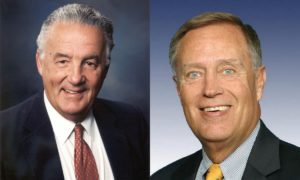 Sarbanes-Oxley (SOX) was named after sponsors U.S. Senator Paul Sarbanes and U.S. Representative Michael G. Oxley. President George W. Bush signed it into law, stating that it included “the most far-reaching reforms of American business practices since the time of Franklin D. Roosevelt. The era of low standards and false profits is over; no boardroom in America is above or beyond the law.”
The bill, which contains eleven sections, was enacted as a reaction to a number of major corporate and accounting scandals, including those affecting Enron, Tyco International, Adelphia, Peregrine Systems, and WorldCom. These scandals cost investors billions of dollars when the share prices of affected companies collapsed, and shook public confidence in the U.S. securities markets.The sections of the bill cover responsibilities of a public corporation’s board of directors, adds criminal penalties for certain misconduct, and required the Securities and Exchange Commission to create regulations to define how public corporations are to comply with the law.
As a result of SOX, top management must individually certify the accuracy of financial information. In addition, penalties for fraudulent financial activity are much more severe. Also, SOX increased the oversight role of boards of directors and the independence of the outside auditors who review the accuracy of corporate financial statements. The Sarbanes-Oxley Act has been cited as a positive influence on the accounting profession for nurturing an ethical culture as it forces top management to be transparent and employees to be responsible for their acts whilst protecting whistleblowers. SOX has also been praised by a cross-section of financial industry experts, citing improved investor confidence and more accurate, reliable financial statements. The CEO and CFO are now required to unequivocally take ownership for their financial statements under Section 302, which was not the case prior to SOX.
As in any area of business, ethical practices are “good business,” but when individuals place their personal interests or wealth above those of the stakeholders, the consequences can be far reaching. It is only through the adherence to ethical reporting and GAAP that the accounting profession can regain the respect and prestige the profession once had and deserves.