

8.1: Characteristics of Policing
- Page ID
- 66358
Chapter 8 – Characteristics of Policing
Characteristics of Policing
Demographic Makeup
Female Police Officers [97]
Societal prejudices are often carried to workplace through gender discrimination, various occupations mirror these social inequalities and biases based on gender, race etc. at workplace. Like many other public institutions, the police reproduce the stereotypes and prejudices of their society with respect to women and men. Gender inequity is conspicuous in Police profession as it is popularly perceived to be one of the most masculine jobs [1]. Yet it is heartening to see women breaking new grounds and entering into police profession that was hitherto considered as exclusive male jobs [2,3]. However, the representation of women in police force remain dismal. Statistics suggest that women composition in police force globally is less than 10%. While developed countries and sub-Saharan countries show marginally better representation with 12-13% proportion being women, yet in developing countries like India women constitute less than 3 % of police force. From equity point of view this gender discrimination at workplace is disheartening as women comprise half of world population and take on two thirds of work burden and yet end up being owners of 10% of world property [4]. Gender equity is considered to be the prerequisite for achieving women empowerment. The United Nations Charter recognized gender equality and called for the rights of individuals to be respected regardless of sex, and whether they come from large or small nations. This recognition is clearly enshrined in the United Nations Universal Declaration of Human Rights (UDHR) of 1948. The Convention on the Elimination of All Forms of Discrimination against Women [5]. (CEDAW) was adopted in 1979 by the UN General Assembly. This Convention marked the advent of globalization of the rights to equality for all women and guaranteed equal access to opportunities Owing to it paramount importance it has been incorporated as one of the eight goals under Millennium Development (MDGs) Goals set by United nations and do believe that unless the third goal gender equity is achieved the remaining of MDG goals are unlikely to be achieved. MDG [6].
Discrimination in Assignments
It has been observed that women have gained entry into masculine police force but their struggle for equity continues. They are being hired in inconsequential positions, are given uninteresting assignments, suffer from inadequate job training, and face resistance from male colleagues [7]. While women have made good progress in the police force by way of increasing their share in terms of absolute number, yet they remain in less powerful occupational positions that are often boring, low paying and with very little advancement for promotions [8]. Discrepancies can be seen in female under representation in prestigious specialist roles such as firearms, combat deployment etc. carrying with its possible implications for lateral and upwards progression. One of the researchers suggest women vulnerability in police force can be mitigated by substantially increasing the representation of women and it is believed that a critical mass of 35% representation would be desirable. But it important to understand that mere numeric representation as mandated by legal directions may not be an effective intervention unless the very culture and mind set in police force is changed by promoting women friendly policies. It is well documented that while women may be successful in getting entry into police force but very often, she remains stagnated career wise struggling to get promoted to higher positions hence Law driven hiring may help women in recruitment but does not ensure equality in promotion [9-11].
Perception of Men
One of the most important barriers that the women face in the police force is the fixed ideas and deep-rooted prejudices that their male co-workers have towards them. Women colleagues are considered to be physically weak, docile, lack in aggression and are considered inefficient in commanding respect among the public [12-14]. Some researchers have analyzed deeper roots of men opposing women’s entry into the police force. The explanation essentially boils down to their anxiety over the self-declared right to manage law and order [15]. Gender experts are of the opinion that such masculine concerns are borne out of their type casted idea that women are basically not suited to be officers as they are inferior to men. It is also feared that women in commanding positions will undermine the solidarity among men. Such perceptions among men officers prevent them talking to lady officers and deliberately make them feel isolated and unwanted. Sometimes this insecurity drives men to bully or even terrorize lady officers by way of rude and derogatory comments in repulsive tone [16].
Barriers
Once into the police force, women are faced with multiple impediments that can be broadly classified as intrinsic and extrinsic barriers. Intrinsic factors are related to job related factors namely workplace environment, confrontational male colleague, negative appraisal by superiors [17] They essentially all sum up the prejudices and biases that target women and are systematically aimed at displacing women from positions or assignments that place them in commanding positions. This is evidently reflected in denial of prestigious transfers and high-profile assignments such as narcotics, gang units, foreign assignments etc. but instead are relegated to what is considered to be typically feminine units i.e., community relationship, domestic violence, child abuse etc. [18]. This differential treatment makes women officers feel unfairly discriminated. Besides women are often topics of sex jokes that make them feel highly uncomfortable in the company of male colleagues [19]. Extrinsic factors are the barriers that come to the fore due to double burden of work and family. It revolves around stress relating managing family and work-related pressures. Women are expected to be the primary care givers in majority of homes that leads to double burden of work and home. Policewomen are stressed given their unpredictable demands of their duty calls that invariably lead to conflicts at home.
Sexual Harassment
Sexual harassment at workplace is very often downplayed and dismissed in the name of friendly flattering between man and women among police colleagues. While this kind of relationship is acceptable when the couple is dating or while in the private places that couples go with mutual consent, but it would be highly inappropriate at the workplaces [20] But have to continue with harassment. One of the main reasons why sexual harassment go unreported in police work force is due to peculiarities of policing in itself like subordination, solidarity etc. [21]. Workplace sexual harassment is very common in police where men and women work together. The vulnerability is heighted in the police due to strict subordination and nature of group work that require women teaming up with male colleagues. This proximity to male colleagues increases woman’s vulnerability for sexual exploitation. Many policewomen also blame it on excessive concentration of power of discretion in the hands of their superiors. Higher ranking male officers often abuse power by enraging the modesty of women during the course of work. It sometimes takes other extreme of over patronization of women by putting on them unreasonable restrictions. The situation is compounded by lack of well laid systems and procedures for women grievance redressal mechanism. The existing systems for reporting sexual misconduct are so cumbersome that it deters any proactive step by the women in reporting workplace sexual harassment [22]. It is also ironical that due to protocols of reporting many times the petition of the victim has to pass through the very superior who has perpetrated the sexual crime. In traditional contexts, both the police and society at large generally favor negotiation and compromise as the appropriate ways to deal with sexual violence. This can lead to situations in which men forgive men for violence committed against women. Such culturally determined behaviors are very hard to alter through institutional reforms unless society is engaged as a whole. Stereotyped behaviors have direct bearing on the institutional culture, affecting mandates, operations and resource allocation [23]. Legal and social change is required for increasing men’s awareness of women’s rights by use of media and popular culture [4].
Stress
Police personnel are confronted with two distinct types of stress that could be categorized as static stress and dynamic stress. Static stress mainly involves social structures and systems that are related to individual background such as Caste, religion, ethnicity, socio-economic status, gender and age. Women police personnel have to particularly deal with gender role and demands for gender appropriate behavior that is often major source of static stress [24]. Dynamic stress is attributable to work environment and ability of police personnel in coping with work related stress. It is well known that policing profession puts the person in the face of grave dangers. Police personnel have to contend with violence and death at crime scenes, [25] loss of life of a colleague or to be firing line personally to save lives of civilians or some time are forced to take lives of criminals all of which get remain embedded as haunting memories [26]. The unpredictability and violent work environment of policing profession prove to be major source of stress.
Maternity Related Issues
Police establishment have been less than sensitive in treating women during their pregnancy period or once they are back from maternity leave. There is absence of clarity on role allocation during pregnancy period, while some women are relegated to clerical work whereas some pregnant women are forced to carry out their regular duty without any concession e.g., patrolling late into their pregnancy, [27] Pregnant women have to very often utilize their personal leave, exhaust all the sick leave or forced to take leave with loss of pay for routine and mandatory ante natal care that require regular hospital visits. Exceeding mandated entitled leave and loss of pay leaves results into loss of seniority which adversely affect their career prospectus. Fear of jeopardizing career prospectus often prevent policewomen to disclose their pregnancy status to their colleagues and reporting officers consequently putting themselves and their unborn child to great dangers. The culmination of pregnancy resulting into successful delivery brings in fresh set of problems with childcare issues, managing work and family conflicts all of which adversely affect job satisfaction. The stress gets acute for the breast-feeding mothers once they return back to duty for the constant need to visit their infant. Lack of private and hygienic place to express and store milk at workplace adds to the stressful experience of policewomen [9,28,29]. There are unfair regulations that requires policewomen to resign if she became pregnant on duty without being married. Unjust victimization of unmarried policewomen happens when they become pregnant out of wed lock consequently, they are unceremoniously suspended or dismissed from the work. In the backdrop of the high incidence of sexual abuse and exploitation at workplace by male colleagues, unmarried policewomen very often tend to become pregnant. Due to unjust regulations women are forced to terminate their pregnancies without revealing the perpetrator of sexual crime at workplace for the fear of dismissal or loss of job [30].
Retention
It is observed that lady police officers are more likely to resign from the job for family reasons as compared to their men counterparts which is vindicated by the exit interviews. Management of home and family, child rearing responsibilities and resultant maternity leave etc. are cited as the major reasons. Resignation rates of women police officers remain low, and broadly comparable between men and women. However, female officers are more likely than male officers to leave for domestic reasons [9]. Pointers to police reforms specially to enhance retention of women personnel can be gathered from exit interviews which are important indicators to widespread discrimination at workplace that women have to put up with. Retention strategies can also be devised by implementing flexible working time to ensure the police service remains an employer of choice. Family support-oriented policies that include maternity leave, flexi timings on working days for woman officers having fed and infant babies will go long way to retain women in police force [4,31,32].
Masculine and Feminine Attribute Display During Work
Behavior at workplace called as occupational behavior is largely determined by the prescribed norms guiding people to do or enact gender within the larger parameters of social structures. Gender does not have a standard, rigid or defined attribute [41]. but it is either reflected or is actually enacted in everyday interactions. The show of masculinity by men or for that matter display of femininity by women can be seen to be emerging from social interactions at workplace [35]. Since norms expect women to behave in certain appropriate manner in society in relation to men, the same is expected by men at the workplace. Demands of authoritarian behavior from police profession from women is totally in contrast to socially prescribed behavior from women, this gender conflict is acutely felt by both by men and women alike [21].
Sociological Effect on Women Police
In some countries newly recruited policewomen are confronted with unfair departmental rules that govern their personal decisions like marriage. There are mandatory two year wait periods before newly recruited policewomen obtain permission to get married. There are similar unfair rules and practices that undermine women’s freedom to decide on the personal issues of pregnancy and childbirth after the marriage. Policewomen face social problem when it comes to marriage as their prospective husbands are officially scrutinized for suitability to marry a policewoman. Often such verification includes personal interrogation and verification of background of prospective husband to make sure that he has no criminal record or tendencies. On the contrary, policemen are free to marry any women of their choice without going through any police verification of their antecedents. Such stipulations are not only discriminatory in nature but are potentially very exploitative as male superiors might delay the process of approval, prolonging the investigations and making women vulnerable to sexual harassment and exploitation in order to speed up verification processes. Socially, policewomen find it difficult find prospective husbands for themselves because men find the process of police verification of their background demeaning and humiliating. Civilian men who are already intimidated by the police are further discouraged by the prospects of being interrogated and investigated [30,42].
Sociological Issues
Social Isolation is part of police profession and the avoidance to intermingle with society is mutual. Civilians tend to avoid police personnel either for the fear or intimidation that the profession inspires in the public. On the other hand, police personnel avoid socialization for professional reasons. Police by profession have to work under thick veil of secrecy, the professional unity and loyalty in the face of threat perception from certain sections of society tend to bind them together to form their own social gathering hence isolating them further away from the society [43]. The process of Defeminization of women is accentuated by the specific dressing code that women have to adhere by making it mandatory to wear typical trousers and tucked in shirts. They are also barred from wearing any jewelry, that are symbols of being married women in certain societies. In some country’s policewomen are required to place the alphabet “W” before their rank and are provided with special type of identification number for easier recognition of them as women. some countries there are discriminatory accommodation and welfare regulation that bars policewomen with civilian spouses to take accommodation and reside in police barracks. Policewomen married to civilian spouses are there by deprived of having the security that police barracks offer and there by exposing them to the public dangers. [30,44].
Benefits of Women in Police
Women, because of their minority status, have developed more refined communication skills and have learned, as perceived second-class citizens, to practice higher levels of empathy. Some research suggests that female inmates will receive sympathetic care from women police officials which would catalyze the transformation of criminal women to shun illegal means and lead a normal law-abiding life [45]. Because of their enhanced communication and empathy skills Policewomen are in a better position resolve and calm down possible violent and acrimonious scene, they also are less likely behave inappropriately in public places as compared to their male counter parts. Policewomen show less inclination to use firearms there by reducing fatal outcomes, they receive lesser resistance from the male offenders and have better cooperation during interrogation [46].
UN Initiatives: Benefit of gender sensitization
United Nations is taking an initiative in promoting gender sensitive reforms in police profession across the world to bring in gender equity within the police force. Gender sensitive police reforms will benefit society at large as it would be help in developing police institution that are responsive to people’s needs. Gender sensitization also will help police to be fair, just and free from any discriminatory approach to crime in society. Sensitization of police will also help them remain committed to their primary mandate to uphold the rule of law in the society. Gender sensitive police reforms have catalyzed the process of establishing exclusive police stations. Specially designated police units have been established to check sexual violence, prostitution, human trafficking and domestic violence in the society. Dedicated gender units in the police force are brought into existence with the larger goal of bringing in the attitudinal change in the society and promote improved reporting of gender-based crimes. It is expected that by pushing gender reforms in police stations will in itself have positive influence of gender equation within the police force. The gender sensitization process is also expected to bring in many administrative and operating procedures amendments within police profession. Making gender equality as an institutional value of police force can revolutionize the entire process of recruitment, promotion and retirement that would be nondiscriminatory in nature [4].
Benefits of Gender Sensitization
One of the indicators for the gender sensitization of police reform is to increase the representation of women in the police force. The idea is to make the police force more community oriented and unless more women are inducted into police it would not get legitimacy in reflecting the population composition. Presence of women in police will also help to moderate extreme use of deadly weapons and force in dealing with volatile situation. One of the biggest gains of gender sensitization would be to reduce crime against women by the way of giving them greater security and reducing their vulnerability to sexual violence against women. Recruiting a greater number of women into police force, providing them with equal opportunity and rewarding them for excellence would pave the way for women rising up in the hierarchy of police ranking. A Successful woman in police would command higher respect in the society there by help in bring in change in public perception towards women [30,47,48].
Police Subculture [98]
At the root of all that is good and bad in law enforcement, there is a strong subculture that permeates most agencies. While a common theme in academic discourse is that police culture is negative, entrenched in cynicism, masochism, loyalty above all else, and an “us versus them” mentality, it has positive aspects that are often overlooked. Members of the law enforcement subculture share values that enable officers to survive what at times is a difficult and emotionally taxing job. Values such as supportiveness, teamwork, perseverance, empathy, and caring enable officers to cope with post-traumatic stress; they are part of team of colleagues who care for their coworkers. The support received from other officers is the result of shared values within the culture. Officers who are faced with dangerous situations are able to rely on their comrades because of other values they believe these members also possess. Values such as bravery, camaraderie, and sacrifice will embolden members to place themselves in harm’s way.
The following table outlines both positive and negative attributes within the police culture.
Table 6.1 Police Culture: Positive and Negative Attributes
|
Positive attributes |
Negative attributes |
|
Safety |
Cynicism |
|
Camaraderie |
Close-mindedness |
|
Empathy |
Biases |
|
Support |
Prejudice |
|
Caring |
Non-scientific tactics |
|
Teamwork |
Overly conservative |
|
Loyalty |
Loyalty |
|
Sacrifice |
Alienated |
|
Suspicion |
|
|
Authoritarianism |
In spite of the positive aspects of police subculture, what society may define as ethical or good conduct may not be viewed within the subculture as relevant to the task, which is, among other things, to continue the mission of “safe-guarding social order” (Reiner, 2010, p.120). The tactics that are relevant to the police subculture may include using trickery and lies to elicit confessions and receiving minor gratuities to foster community relations (Reiner, 2010). Examining ethics and its relation to the police subculture is important to help delineate not only the grey area of ethics but also the grey area within which the police operate.
Once selected and hired by municipal police agencies, police recruits are exposed to police subculture during their training partially due to the instruction they receive from police officers who are recently retired or seconded to the police academy. However, the choice to become a police officer is not made in a vacuum. When recruits start their training, they often think like police officers on a visceral level, because generally certain individuals are drawn to the occupation (Conti, 2010). In an ethnographic study observing police recruits at an American police academy, Conti (2010) observed that the evolution of recruits into members who reflect the police mindset likely started at an early age when they formed the belief that they would become police officers. As potential officers enter the selection process, they become involved in an extensive application process, which is their first introduction into the police subculture. Rokeach, Miller, and Snyder (1971) concluded that a police personality distinct from others does exist, and proposed the idea that individuals come into an occupation with predetermined attributes that are identified with their new occupation. However, Rokeach et al. (1971) also found that this distinct police personality is attributed to predispositions of personality that are present before the recruits’ induction into the police subculture. These distinct predispositions are conducive to a career in policing and allow the individuals to comfortably choose and fit into the subculture (Conti, 2010; Rokeach et al., 1971). While the police subculture is distinct, at times it does attempt to catch up to the norms of the mainstream culture and can shift from negative attributes to positive attributes (Skolnick, 2008).
A historical look at the police subculture offers a view into the changing nature of how police officers see the world. In analyzing the police subculture in the 1940s, Myrdal (1964) observed in an ethnographic study of police officers in America that officers behaved in an overtly bigoted fashion toward African Americans. Myrdal (1964) observed that these were the norms of the day and that the police subculture reflected the attitude of mainstream society toward African Americans. While not supported empirically, it would be a logical conclusion that police recruits or rookie police officers would have shared the same cultural bigotry as mainstream society and their fellow police officers. More recently, when we see and question incidents involving police use of force on racial minorities, it is important to look broadly at society as well. The shooting of Michael Brown in Ferguson, Missouri, is an example where prominent civic leaders pointed out that the incident was merely a manifestation of a broader issue of racism that is widespread throughout the United States.
As society has evolved so too have law enforcement agencies. Ethical conduct and diversity play a large role in recruiting and are considered important attributes of potential officers. Crank and Caldero (2010) have concluded that due to society’s emphasis on ethics and the stringent hiring process, recruits are typically very ethical. The subculture, they argue, is not only present but also highly influential; the recruits’ ethical orientations are formed earlier, well before their application process commences (Crank and Caldero, 2010). Conversely, Conti (2010) and Banish and Ruiz (2003) argue that the police subculture is present when the officers start at the police academy and that its influence on recruits’ ethics is negative and destructive.
Conti views a recruit’s induction into the police academy as a transformation of the recruit into the “organizational ideal” (Conti, 2010). It is in this way, Conti (2010) argues, that the police subculture, ever-present at the police academy, assists in the conversion of the recruit from civilian to police officer. These cultural nuances are passed on through a variety of means such as:
- Parades and drills (Campbell, 2007)
- Marching (Davis, 1996)
- Storytelling (Banish and Ruiz, 2003; Ford, 2003; Newburn and Reiner, 2007).
Storytelling by instructors in the police academy can be a valuable and effective teaching tool, as demonstrated by Conti’s (2010) study of an American police academy. Stories told by trainers must reflect ethical conduct and be relatable to the lesson plan goals and outcomes. Conversely, stories by instructors may inflate the recruits’ perception of danger (Banish and Ruiz, 2003) or cynicism (Ford, 2003), but instructors’ stories can also serve to relay positive outcomes, such as surviving life and death situations confronted by police (Conti, 2010). Ultimately, storytelling perpetuates the police subculture by passing on both truisms as well as not-so-true legends (Newburn and Reiner, 2007). Banish and Ruiz (2003) further contend that storytelling affects the police culture negatively by instilling negative traits of cynicism, suspicion, conservatism, and authoritarianism.
These negative traits are often associated with a police subculture that affects senior police officers, and it is specifically these traits that define an individual as a police officer. Skolnick (2008) considers the police vocation as being similar to that of a priest or the clergy: the culture wholly defines what it means to be a police officer by the traits that police officers share. These traits, according to Skolnick, include “skepticism, cynicism, mistrust of outsiders—all are traits observers of police apply to them and that they apply to themselves” (2008, p.36). Twersky-Glasner (2005) concurs, noting that the police are members of a unique occupation in which they are the insiders and the rest of society are the outsiders. The insiders are those who are trustworthy while outsiders are viewed with suspicion (Skolnick, 2008). This is reflected not only in the culture in which recruits find themselves, but also in the training they receive and the way in which they as civilians are accepted into the academy to begin training.
In a qualitative study of police officers, Loftus (2010) followed officers on the street and determined that two characteristics are ever-present in the police culture: cynicism and moral conservatism. While older officers exhibit these traits, Loftus (2010) did observe that newer officers are hired from a more diverse background that includes different sexual orientations, cultures, and races. This may enable the police subculture to adapt and overcome its more negative characteristics.
Police Discretion [99]
According to researcher Joan McGregor (Kleinig,1996), discretion can only be interpreted as those decisions that are made with lawful authority rather than decisions made for illegal reasons. Furthermore, the individuals within an institution must have lawful authority to make the decisions and must operate under the constraints acceptable to others within the organization or profession. This definition is useful as it allows discretion to be considered in a legal context rather than only when police officers operate illegally and decide to commit prohibited acts, which is not considered to be lawful discretion. Kleinig (1996) accordingly considers these illegal acts not as discretion but rather as a decision to engage in forbidden conduct. In a law enforcement context, discretion only concerns decisions that are made in a legal setting. When decisions that are made by officers do not yield the desired positive results, but are made in good faith, these decisions still fall under the umbrella of discretion. Decisions made by officers without good faith are not classified as discretionary.
Discretion in law enforcement, and especially within policing, is critical to both the functioning of the police department and to the relationship with the public the police department serves. It is unusual within the paramilitary policing environment, due to the inverse relationship between discretion at the top of the rank structure and that of the lower end of the rank structure, compared to military bodies and some commercial enterprises (Manning, 2010). Officers who have recently started in patrol exercise more discretion than the chief constable or the highest rank within the department. In comparison, a general in the army possess discretionary powers at a much higher level than does a low-ranking soldier.
There is an inevitable tension that exists between paramilitary agencies that require members of all ranks to follow orders and those agencies that acknowledge discretion among members of lower ranks is necessary to function. In the military, discretion is seldom used at lower levels. Orders are given and are to be followed regardless of the feelings or desires of the subordinate. The move toward more discretion inevitably leads police services away from the military hierarchical structure to a more organic structure in which decisions are made throughout the organization (Hughes and Newton, 2010). Key to the argument, however, is that some in law enforcement view professionalism as partially gauged on the amount of discretion that is afforded to an occupation, and it is in this respect that a shift toward more discretion will result in police services being more professional.
It is also important to explain how the term professionalism will be used in the context of law enforcement. While arguments persist as to whether or not policing is a “profession” or an “occupation,” it is important to note that professionalism , within a law enforcement context, is related to the ability of police officers to exercise discretion with a level of autonomy (Villiers, 2003). More specifically, the meaning of professionalism in this context is related to the freedom of police to make discretionary operational decisions. When discretion is removed from police due to managerialism and accountability, professionalism decreases. Klofas, Stojkovic, and Kalinich (1990) use the term deprofessionalization to describe this process. Without discretion, it is argued, an organization loses its professionalism.
The shift to more professionalism requires the need for management to proactively promote operational decisions in a manner that is reflective of an organic organization and still be able to control its members (Jones, 2008).
However, Sanders and Young (2007) take a dim view of police management’s ability to control the discretion of operational police officers. Discretion, they argue, has the potential to:
- Lead officers to fabricate evidence
- Look for guilt rather than truth
- Summarize statements with bias
- Handle exhibits poorly and fail to disclose evidence
The ability to control and provide effective leadership to officers, who possess more discretion and autonomy than the management, raises serious implications for police managers.
Crawshaw, Devlin, and Williamson (1998, p.24) argue that it is due to the discretion afforded to police at the operational level that police work is unsupervised and for large amounts of the officer’s day “unsupervisorable.” Pagon (2003, p.159) refers to this as the “discretionary paradox” in which police officers are answerable to their superiors even though they operate with a high degree of autonomy and out of view of their supervisors.
An irony within law enforcement exists because while a law enforcement structure is different from the military, the police still have a quasi-military structure. To further complicate matters, within policing specifically, sergeants have an increased role in administration, which has limited their ability to provide supervision on the street. Ultimately, this does not allow for close supervision of junior officers who are forced to exercise their discretion often without the benefit of the wisdom of experienced supervisors (Butterfield, Edwards, and Woodall, 2005). Lipsky (1980) warns that the need for a high degree of control through supervision is critical in allowing discretion to be effective; without such control, officers will make decisions that are self-promoting and in opposition to organizational goals. Maintaining direct supervision and control is difficult for front-line managers who are faced with an increased workload.
Because of the discretionary mistakes that are inevitably made by officers, attempts have been made to control operational decision making among police officers (Butterfield, Edwards, and Woodall, 2005). Lipsky (1980) notes that discretion has been curtailed in regard to domestic assaults where police officers are encouraged to charge offenders rather than informally resolve the situation. In British Columbia, the Violence Against Women in Relationships Policy was introduced in 1993 and underwent changes in 2010. The policy makes clear to officers the protocols, roles, operational procedures, and responsibilities they must adhere to when investigating instances of domestic assault (British Columbia Ministry of Public Safety and Solicitor General Ministry of Attorney General, Ministry of Children and Family Development, 2010). Policies such as these are regarded as examples of positive arrest policies (or legislation) where the intention is to limit discretion in favor of arrests (Rowe, 2007). Since this policy is intended to limit discretion, it ultimately holds officers accountable if they choose not to arrest while still affording them the facade of autonomy (Rowe, 2007).
Studies have shown that there are problems with such policies and legislation, and an examination of such problems highlights the benefits of a shift to more discretion (Fyfe, 1996; Mastrofski, 2004; Neyroud, 2008; Rowe, 2007). In a study of officers’ perceptions of the Domestic Violence, Crime and Victims Bill, an equivalent example from Britain, Rowe (2007) found that officers were concerned about the ethics of positive arrest policies in cases where they would not have arrested had it been left to their discretion. Officers felt that when they are forced to arrest suspects in cases where they would otherwise operationally decide against charges, their ethical standards would be compromised as they believed that such charges would be unjust. Other problems associated with the legislation included such things as increased workload, reduced professionalism, and the potential for worsening a situation due to the arrest (Rowe, 2007). The Domestic Violence, Crime and Victims Bill (2003) demonstrates inherent problems when discretion is curtailed either through legislation or organizational policy; however, it does highlight three benefits that would result from a shift to more discretionary powers in operational decision making, namely greater efficiency or a smaller workload (Davies and Thomas, 2003), professionalism and ethics (Villiers, 2003), and leadership within the junior ranks of the service (Bass, 1990).
It is impossible for the police to detect all crimes all the time. However, even if the police were able to detect every crime, resources would not be sufficient to investigate each one and make an arrest. Discretion is needed to filter offences so that only those that are most important will be investigated, even though at times such discretion may be misused (Tillyer and Klahm IV, 2011). Without discretion the police, and indeed the whole criminal justice system, would become overwhelmed with cases, resulting in public displeasure (McLaughlin, 2009). Lipsky (1980) further asserts that discretion among police officers will always be mandatory due to the inevitable lack of resources and the need for an efficient service. Decisions, ethically made, will allow for charges to be limited to only those that matter and will render the police service more efficient in prosecuting only such offences.
However, while efficiency is important in all public organizations, there is the danger that police agencies will lose their way if efficiency is promoted over ethical and rightful decisions concerning the protection of the public and if citizens are denied justice. Rawls (1971, p.71), in his seminal theory on justice, observes that “the principle of efficiency cannot serve alone as a conception of justice.” Discretion, according to Rawls (1971), should not be used as a means of ensuring efficiency but rather as a way of applying a utilitarianism counterbalance to unjust laws within the justice system. The end result should never be efficiency at the expense of human rights and ethical policing. Dobel (2005, p.161) extends this thought process to discretion when noting “that the existence of discretion increases the tension between liberal democracy and public management and administration.” The end result of using discretion as a means to ensure maximum efficiency potentially leads to an abuse of process in which the rights of individuals are superseded by the will to maximize results with minimal resources (Dobel, 2005).
Therefore, the goals of the organization can become ambiguous, caught between ensuring democracy and individual rights and promoting efficiency. Goal ambiguity can lead to placing the rights of individuals at lower levels of importance and can be further fostered by the different subcultures within the police service (Lipsky, 1980).
Goal ambiguity is consistent with some of the inherent problems faced by police officers in operational decision making. Lipsky (1980) identifies a conflict that police confront between client-oriented goals, social-engineering goals, and organizational-centered goals, and spousal-assault policies are an example. In this instance, an officer is mandated to charge where there is evidence even if the officer feels charges are not appropriate and go against the goals of the client—for example, if the victim does not wish to pursue charges (Rowe, 2007). Likewise, an officer who is acting only to comply with policy guidelines may be inclined to perform poorly to compromise the investigation, thereby subverting the charge which he or she was obliged to make, however reluctantly (Lipsky,1980).
Proper use of discretion, within the parameters of McGregor’s definition (as cited in Kleinig, 1996), will effectively allow the state to save resources while enforcing only the violations that the public want enforced. According to Reiner (2010), police require the ability to use discretion due to the inevitable lack of police resources to enforce all laws all the time. While police services chronically lack the resources to formally enforce all laws, they must, as a result, allow officers to determine which laws will be enforced at the operational level (Crawshaw, Devlin and Williamson, 1998; Lipsky, 1980). The discretion allowed at the lower levels of the hierarchy allows police services to spare precious front-line resources while concentrating on those offences that should be enforced in accordance with the police service’s values and/or the values of the community the agency serves. While discretion creates an efficient system, the proper operational decisions must be made at the lower levels of the hierarchy, which will benefit the agency by fostering leadership throughout the organization.
Emotional Intelligence [100]
|
Learning Objectives |
|
Emotions Affect Attitudes and Behaviors at Work
Emotions shape an individual’s belief about the value of a job, a company, or a team. Emotions also affect behaviors at work. Research shows that individuals within your own inner circle are better able to recognize and understand your emotions.
So, what is the connection between emotions, attitudes, and behaviors at work? This connection may be explained using a theory named Affective Events Theory (AET). Researchers Howard Weiss and Russell Cropanzano studied the effect of six major kinds of emotions in the workplace: anger, fear, joy, love, sadness, and surprise. Their theory argues that specific events on the job cause different kinds of people to feel different emotions. These emotions, in turn, inspire actions that can benefit or impede others at work.

For example, imagine that a coworker unexpectedly delivers your morning coffee to your desk. As a result of this pleasant, if unexpected experience, you may feel happy and surprised. If that coworker is your boss, you might feel proud as well. Studies have found that the positive feelings resulting from work experience may inspire you to do something you hadn’t planned to do before. For instance, you might volunteer to help a colleague on a project you weren’t planning to work on before. Your action would be an affect-driven behavior. Alternatively, if you were unfairly reprimanded by your manager, the negative emotions you experience may cause you to withdraw from work or to act mean toward a coworker. Over time, these tiny moments of emotion on the job can influence a person’s job satisfaction. Although company perks and promotions can contribute to a person’s happiness at work, satisfaction is not simply a result of this kind of “outside-in” reward system. Job satisfaction in the AET model comes from the inside-in—from the combination of an individual’s personality, small emotional experiences at work over time, beliefs, and affect-driven behaviors.
Jobs that are high in negative emotion can lead to frustration and burnout—an ongoing negative emotional state resulting from dissatisfaction. Depression, anxiety, anger, physical illness, increased drug and alcohol use, and insomnia can result from frustration and burnout, with frustration being somewhat more active and burnout more passive. The effects of both conditions can impact coworkers, customers, and clients as anger boils over and is expressed in one’s interactions with others.
Emotional Labor
Negative emotions are common among workers in service industries. Individuals who work in manufacturing rarely meet their customers face-to-face. If they’re in a bad mood, the customer would not know. Service jobs are just the opposite. Part of a service employee’s job is appearing a certain way in the eyes of the public. Individuals in service industries, such as police officers, are professional helpers. As such, they are expected to be upbeat, friendly, and polite at all times, which can be exhausting to accomplish in the long run.
Humans are emotional creatures by nature. In the course of a day, we experience many emotions. Think about your day thus far. Can you identify times when you were happy to deal with other people and times that you wanted to be left alone? Now imagine trying to hide all the emotions you’ve felt today for 8 hours or more at work. That’s what cashiers, schoolteachers, fire fighters, and police, among other professionals, are asked to do. As individuals, they may be feeling sad, angry, or fearful, but at work, their job title trumps their individual identity. The result is a persona—a professional role that involves acting out feelings that may not be real as part of their job.
Emotional labor refers to the regulation of feelings and expressions for organizational purposes. Three major levels of emotional labor have been identified. Hochschild, A. (1983).
- Surface acting requires an individual to exhibit physical signs, such as smiling, that reflect emotions customers want to experience. A children’s hairdresser cutting the hair of a crying toddler may smile and act sympathetic without actually feeling so. In this case, the person is engaged in surface acting.
- Deep acting takes surface acting one step further. This time, instead of faking an emotion that a customer may want to see, an employee will actively try to experience the emotion they are displaying. This genuine attempt at empathy helps align the emotions one is experiencing with the emotions one is displaying. The children’s hairdresser may empathize with the toddler by imagining how stressful it must be for one so little to be constrained in a chair and be in an unfamiliar environment, and the hairdresser may genuinely begin to feel sad for the child.
- Genuine acting occurs when individuals are asked to display emotions that are aligned with their own. If a job requires genuine acting, less emotional labor is required because the actions are consistent with true feelings.

Research shows that surface acting is related to higher levels of stress and fewer felt positive emotions, while deep acting may lead to less stress. Emotional labor is particularly common in service industries that are also characterized by relatively low pay, which creates the added potentials for stress and feelings of being treated unfairly. In a study of 285 hotel employees, researchers found that emotional labor was vital because so many employee-customer interactions involve individuals dealing with emotionally charged issues. Emotional laborers are required to display specific emotions as part of their jobs. Sometimes, these are emotions that the worker already feels. In that case, the strain of the emotional labor is minimal. For example, a funeral director is generally expected to display sympathy for a family’s loss, and in the case of a family member suffering an untimely death, this emotion may be genuine. But for people whose jobs require them to be professionally polite and cheerful, such as flight attendants, or to be serious and authoritative, such as police officers, the work of wearing one’s “game face” can have effects that outlast the working day. To combat this, taking breaks can help surface actors to cope more effectively. In addition, researchers have found that greater autonomy is related to less strain for service workers in the United States as well as France.
Cognitive dissonance is a term that refers to a mismatch among emotions, attitudes, beliefs, and behavior, for example, believing that you should always be polite to a customer regardless of personal feelings, yet having just been rude to one. You’ll experience discomfort or stress unless you find a way to alleviate the dissonance. You can reduce the personal conflict by changing your behavior (trying harder to act polite), changing your belief (maybe it’s OK to be a little less polite sometimes), or by adding a new fact that changes the importance of the previous facts (such as you will otherwise be laid off the next day). Although acting positive can make a person feel positive, emotional labor that involves a large degree of emotional or cognitive dissonance can be grueling, sometimes leading to negative health effects.
Emotional Intelligence
One way to manage the effects of emotional labor is by increasing your awareness of the gaps between real emotions and emotions that are required by your professional persona. “What am I feeling? And what do others feel?” These questions form the heart of emotional intelligence. The term was coined by psychologists Peter Salovey and John Mayer and was popularized by psychologist Daniel Goleman in a book of the same name. Emotional intelligence looks at how people can understand each other more completely by developing an increased awareness of their own and others’ emotions.
There are four building blocks involved in developing a high level of emotional intelligence. Self-awareness exists when you are able to accurately perceive, evaluate, and display appropriate emotions. Self-management exists when you are able to direct your emotions in a positive way when needed. Social awareness exists when you are able to understand how others feel. Relationship management exists when you are able to help others manage their own emotions and truly establish supportive relationships with others.
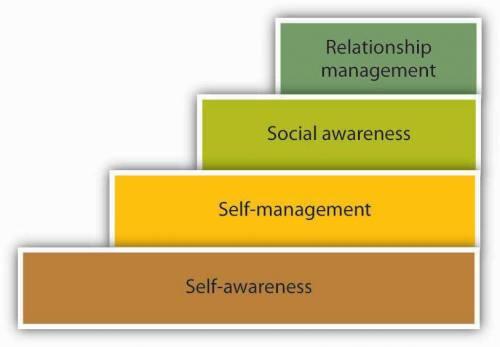
In the workplace, emotional intelligence can be used to form harmonious teams by taking advantage of the talents of every member. To accomplish this, colleagues well versed in emotional intelligence can look for opportunities to motivate themselves and inspire others to work together. Chief among the emotions that helped create a successful team, Goleman learned, was empathy—the ability to put oneself in another’s shoes, whether that individual has achieved a major triumph or fallen short of personal goals. Those high in emotional intelligence have been found to have higher self-efficacy in coping with adversity, perceive situations as challenges rather than threats, and have higher life satisfaction, which can all help lower stress levels.
|
Key Takeaway |
|
Emotions affect attitudes and behaviors at work. Affective Events Theory can help explain these relationships. Emotional labor is higher when one is asked to act in a way that is inconsistent with personal feelings. Surface acting requires a high level of emotional labor. Emotional intelligence refers to understanding how others are reacting to our emotions. |
|
Exercises |
|